
Advancing Sustainable Forest Governance
AFF harnesses evidence, capacity building, and multi-stakeholder partnerships to transform African forestry livelihoods.
Resources & Highlights in this Area
Recent Stories & News
Context
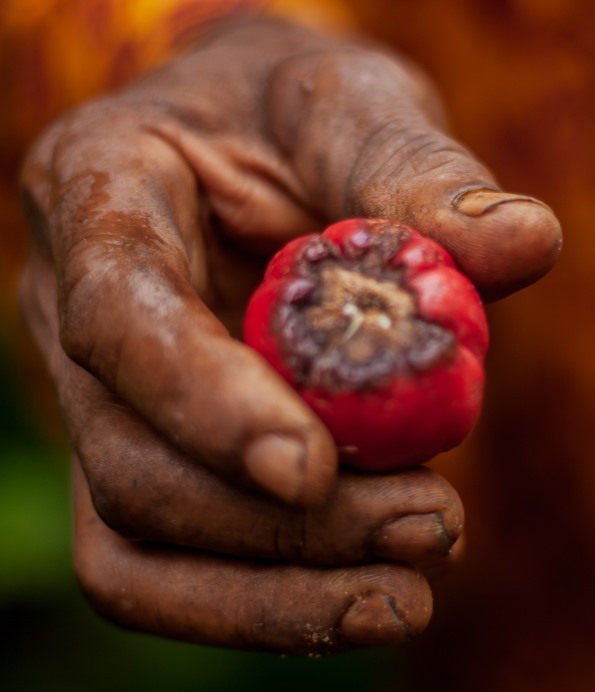
With rising food prices and increasingly frequent droughts, floods and fires, as well as insufficient improvements in food production technologies and agricultural policies, food security is rapidly emerging as a key factor in Africa’s social and economic development. The interactions between forest and trees, on the one hand, and food security, on the other, may not be immediately clear to most people, with the obvious exception of when forest land is cleared for agriculture. Still, there are several such direct and indirect interactions, many of which already play significant roles in the food supply for rural people, and most of which hold a tremendous potential for improvements. First, there is the direct production of foods from forests and trees, e.g. fruits, nuts, other edible parts of some trees (leaves, roots), game animals, honey, etc. Fodder from trees and shrubs for domestic animals, as well as forest grazing, are crucial sources of feed in animal husbandry. Trees and shrubsare potent improvers of soil fertility (e.g. through N-fixation on farm, as fallows in shifting cultivation, and via organic inputs through litter fall and root decay), they can be arranged on farm-land to reduce erosion, and they can provide a more amenable microclimate for food crops and domestic animals (shade, wind brakes). Forests on a larger landscape scale will also positively influence water accessibility for farming as well as creating a better local climate.
Finally, wood and non-wood tree products can provide much needed additional cash incomes for farmers and rural communities. In recent decades, there has been a rapidly increasing interest in and research on such interactions, particularly where trees and shrubs are integrated into farms (agroforestry), but much remain to be done. The potential of food accessions from outside farms (in forests and on common land), is often hampered by unclear tenure and user rights.
Examples of subjects, challenges and opportunities to be addressed
Human food from forests and trees; e.g. identifying and analysing the absolute and relative importance of food from forests and trees (fruits, nuts, berries, honey, game meat, etc.) in the nutrition of people; how to improve management of important “food trees” in forests, woodlands and on farm; possibilities for genetic improvement and domestication.
Trees and shrubs enhancing growth of agricultural crops and domestic animals; e.g. analysing the potential role of trees and shrubs in enhancing soil fertility in crop land; improved micro-climate (wind, temperature, shade); improved growth, productivity and quality of domestic animals through fodder from trees and shrubs.
Interactions between forests and trees and agriculture at landscape level; e.g. analysing how forests and trees in the landscape can positively influence sustainable food production.